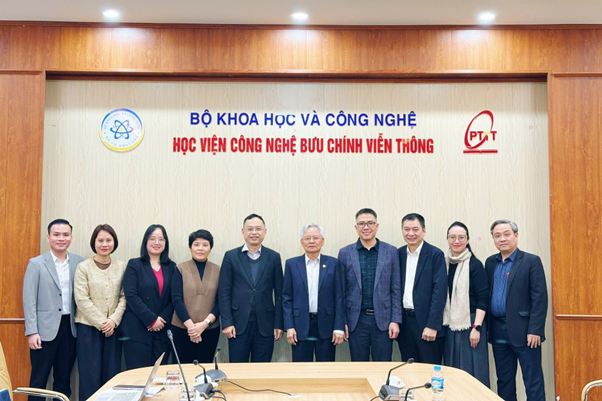
On the afternoon of February 3, 2026, the Posts and Telecommunications Institute of Technology (PTIT) convened an appraisal council for the Master’s Program in Mass Communication, chaired by Prof. Dr. Ta Ngoc Tan, Standing Vice Chairman of the Central Theoretical Council. The appraisal session was also attended by distinguished scientists and experts from universities, research institutes, regulatory agencies, and journalism and communications organizations.
The appraisal session held particular significance for the Faculty of Multimedia as it took place on February 3, the anniversary of the founding of the Communist Party of Vietnam. This coincidence was not only symbolic but also added further significance to the event, highlighting the responsibility, mission, and role of educational institutions in contributing high-quality human resources to the country.
The appraisal of the Master’s program was not merely an important academic event, but also represented a significant milestone affirming the Faculty of Multimedia’s growing maturity in the development of postgraduate education, scientific research, and knowledge contribution to the communications field. It marked an important step forward in the Faculty’s continuous efforts to enhance academic quality and respond to the evolving demands of innovation and international integration in the communications sector.
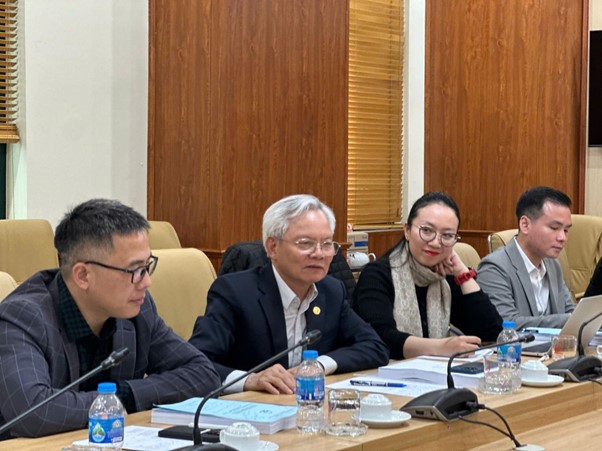
Prof. Dr. Ta Ngoc Tan, Standing Vice Chairman of the Central Theoretical Council, and members of the Appraisal Council engaging in an in-depth discussion and comprehensive evaluation of the academic program.
Following the opening remarks by Assoc. Prof. Dr. Tran Quang Anh, Vice President of PTIT, the Council conducted a rigorous and comprehensive appraisal of the program, covering its objectives, expected learning outcomes, course structure, academic orientation, and alignment with the practical needs of the communications industry in the current context of digital transformation. The Appraisal Council highly regarded the systematic approach adopted in designing the Master’s Program in Mass Communication.
The program was developed based on clearly defined educational objectives and expected learning outcomes, with a course structure designed to ensure logical progression between theoretical foundations, research methodologies, and specialized courses. This approach helps learners develop a solid body of knowledge together with the capacity to conduct independent research.
In addition to its academic rigor, the Council also recognized the program’s strong practical orientation. The curriculum incorporates contemporary issues, skills, and real-world contexts in modern communications, particularly within digital and multi-platform media environments.
The program structure enables learners not only to strengthen their research capabilities and critical thinking skills, but also to apply their knowledge in professional practice, meeting the current needs of news organizations, communications organizations, and businesses.
The appraisal session concluded with a range of valuable recommendations that will serve as a basis for further refining the program before its official implementation. This represents an important step forward in the Faculty of Multimedia’s postgraduate education development strategy, contributing to the enhancement of human resource quality in the communications field and strengthening PTIT’s academic standing in the context of innovation and international integration.